
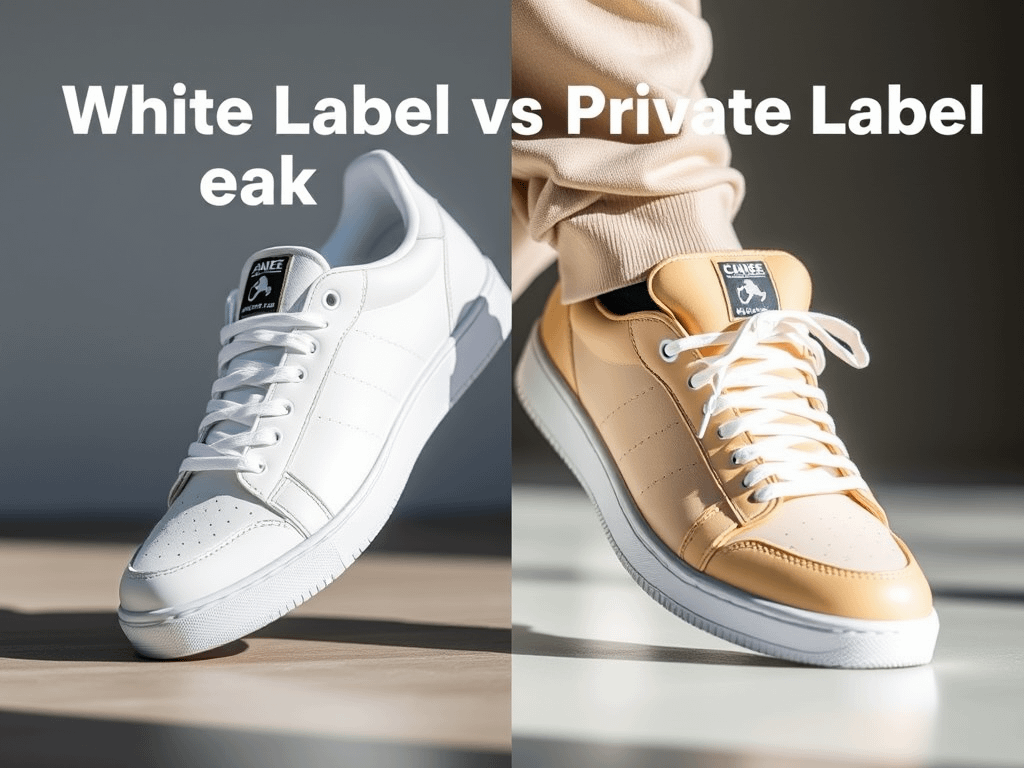
Picking the right manufacturing model is necessary while starting a shoe brand. The best options are white-label and private label sneakers.
Both models have distinctive benefits and limitations that can impact the identity, operations, and profit rate of brands.
By learning how each model works, you can easily pick which will align with your business strategy. In this blog, we will take a deep look at both models to help you choose. So, let’s begin.
Things To Know About White Label Sneakers
Manufacturers produce white-label sneakers and sell them to retailers. The retailers then brand the sneakers as their own. By using this model brands can sell quality sneakers without investing in production facilities.
White-label sneakers are easy to launch in the market. This not only saves time but also reduces the costs related to R&D and manufacturing. Brands who are looking to expand their shoe lines without delays can benefit from this.
Moreover, white-label sneakers offer a great balance between quality and cost. By picking the right manufacturer, brands can offer products that meet customer expectations.
Pros of White Label Sneakers
- Help brands to easily launch products in the market
- Minimize the product development risk
- Help brands to broaden their product line
- Lower production cost
- Allow businesses to focus on marketing and sales
Cons of White Label Sneakers
- It has limited customization ability
- Brands have less control over product quality and the manufacturing process
- There is a risk of brand dilution
Things To Know About Private Label Sneakers
Private label sneakers help brands have a unique image in the market. They allow brands to have full control over customization.
Brands can choose the design, shoe materials, and production process. They can customize each aspect of the sneaker as per customer’s demands to boost customer loyalty.
With this high customization level brands can build a strong identity. That’s why this model works well for brands that want to have a unique image in the market.
However, private labeling needs a large upfront investment for design, materials, and production.
Perhaps, this high investment has a greater chance to produce high profit margins. Brands can charge more from customers according to the customization level of sneakers.
For the best private labeling solutions, you can collaborate with Teshi Footwear. They have been offering exceptional sneaker manufacturing services for more than 20 years. With their expertise, premium material selection, and sustainable production process they help brands to grow.
Pros of Private Label Sneakers
- Gives complete control over product design, material, and production
- Boost brand recognition
- Help brands to boost profitability
- Allow brands to stand out in the market
- Modify products according to customer feedback
Cons of Private Label Sneakers
- Require more investment for product design and materials
- Take more time to launch the product in the market
- Difficult to manage inventory
- Needs a more hands-on approach
Major Differences Between White Label and Private Label Sneakers
To minimize production costs and boost sales, you must pick the right manufacturing model. Here are some major differences between white-label and private label sneakers that will help you decide. Take a look at them:
1- Production & Customization
White label sneakers have limited customization options. The manufacturer has some basic sneaker designs to offer. However, private label sneakers offer full control over customization. They allow brands to customize every aspect of the shoe. So that brands can have unique identities and fulfill consumer’s demands.
2- Cost & Time Efficiency
White labeling requires less investment and allows brands to launch shoes quickly. However, there is a risk of brand dilution due to limited design options. In contrast, private labeling needs more investment and takes time to bring products to market. However, private labeling results in better sales that boost profit margins.
3- Brand Identity
Private label sneakers offer the best opportunity to boost brand identity through unique products. However, white-label sneakers struggle to stand out in the market because of the same branding technique.
Which One To Choose: White Label vs Private Label Sneakers
The choice between white-label and private label sneakers depends on the brand’s position and future goals.
If you have less investment and want to launch a product quickly in the market then white labeling is your option.
On the other side, if you value uniqueness and want full control over production then pick private labeling.
In conclusion, both models are beneficial for the shoe brands. It’s their limitations that urge brands to pick between them.
Take your time to know what your brand needs to grow then pick a model.
Remember only the right choice of model will help you stand out and have better profit margins. So don’t rush this decision.

