In the evolving footwear industry, placing bulk orders is not about the volume. It is about making a long-term strategy for precise and high-quality shoes. With a reliable label shoe manufacturer and knowledge of the bulk shoe order process, brands can expand their existing lines or launch new ones efficiently.
The smooth shoe order process ensures streamlined operations and consistent quality. Here, we will discuss everything that a brand should know about how to bulk order shoes.
11 Key Steps for the Bulk Shoe Order Process
Brands should know the structured journey of the bulk shoe order process before risking their investment. Here are the phases of the order process that will help the brand take the right step.

1. Planning & Pre-Production Prep
Before placing your bulk order, define your target MOQs, size ratios, and delivery timelines. Partner with the design teams to finalize the shoe styles you want for your brand.
Also, look for dependable sourcing teams to get top-notch quality materials for the shoes. Ask the manufacturer to make a prototype as per your instructions so you can point out flaws before full-scale production and save time and money.
2. Supplier & Manufacturing Coordination
You must have the right supplier on your side. With the best support, you can deal with a bulk wholesale shoe order easily. You can also opt to buy shoes wholesale if they fulfill your brand requirements.
The aim is to get quality shoes that boost sales. If you go with the manufacturer option, then make sure to be clear about your quality standards, pricing structure, and vision.
Having clear communication is critical when you deal with low MOQ shoe order suppliers because of specific production.
3. Shoe Production in Bulk Shoe Order Process
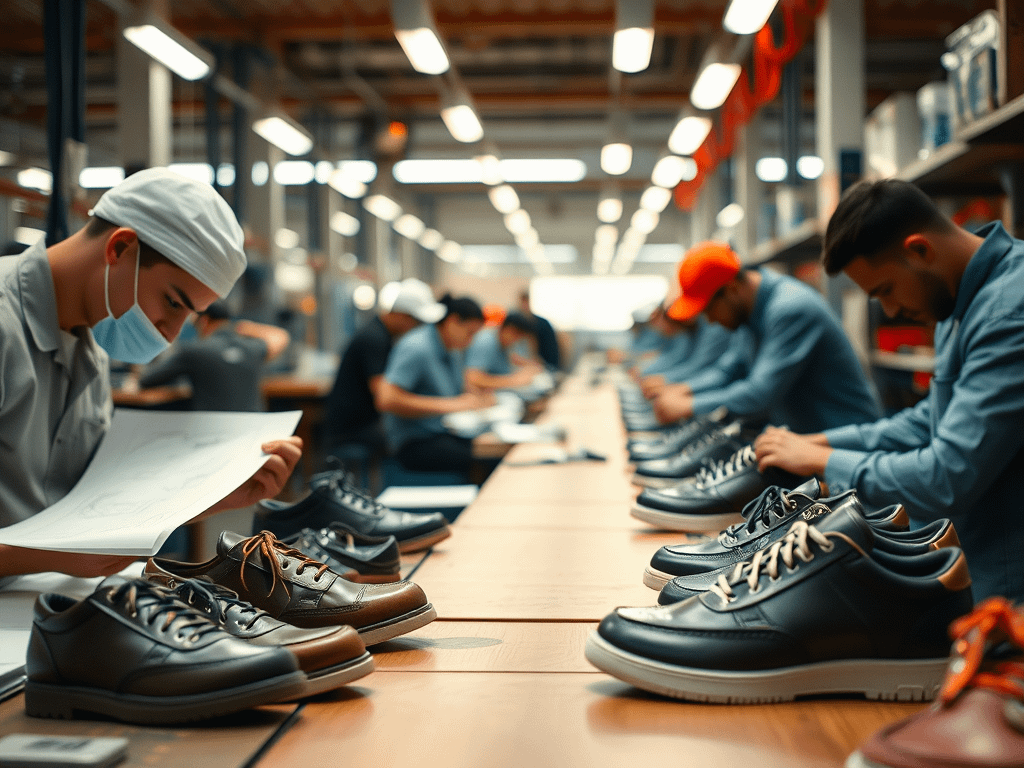
The factory begins the bulk production once you approve the prototype. The process involves cutting, stitching, assembly, and finishing. For factory shoe orders, materials like synthetic fibers or leather are first prepared and cut using digital machines.
Then they are stitched, assembled, and go through finishing touches like printing, polishing, or branding. Shoe brands that look for personalized designs should opt for custom bulk shoes. Because it requires some additional steps, like mold development or special material sourcing.
4. Quality Control & Inspection in Bulk Shoe Order Process
Quality assurance is built into each phase of bulk shoe production. With random sampling during production, you can catch defects early, reduce waste, and maintain your reputation.
Also, you should do an inspection for material integrity, stitching, alignment, and shoe fitting. It’s best to document these issues and start a feedback loop with the manufacturer for better improvement.
5. Packaging & Labeling in Bulk Shoe Order Process
Packaging is a key detail in the bulk footwear process. It affects the shipping costs, in-store presentation, and protection during delivery. For effective packaging, the brand should specify the type of box and inserts.
They must mention all the labeling requirements before packaging to reduce shipping volume and enhance warehouse management.
6. Inventory Management & Fulfillment Setup
Brands should invest in inventory setup that integrates with the sales channel and warehouse. This is a crucial step if you plan to order shoes in bulk frequently.
It is also essential that fulfillment logistics consider both DTC and wholesale distribution models. Many brands that deal with bulk shoes for retailers also service online users using hybrid fulfillment workflows.
7. Shipping for Shoe Order Process
To ensure your bulk sneaker order is smooth, use barcode scanning and digital inventory tools that reduce human errors. Use protective and efficient packaging that stays rigid and doesn’t let the shoes get damaged during the transit process.
Moreover, brands should pick reliable shipping partners that understand the order timeline and deliver shoes on time. They should also be flexible be both B2B and B2C models if you are shipping globally as well.
8. Returns & Reconditioning Strategy
Footwear has the highest return rates in E-commerce. It can be because of sizing, style, or user behaviour. That’s why it is important to plan to handle the returned inventory to avoid the chaos.
Brands must make clear policies for inspection, restocking, and reconditioning. If you are working with private label bulk shoes, make sure your return handling keeps the brand’s quality standards intact.
Reconditioning can also become a revenue stream. Returned shoes in good shape can also be repackaged and sold as new products to minimize loss.
9. Logistics & Distribution in Bulk Shoe Order Process
Shoe distribution needs proper planning, whether you are going B2B or DTC. With a shoe bulk buying guide, you can easily think about shipping zones, pallet sizes, and freight options.
Things can get complex if you plan to do both DTC and retail. In such a situation, you should use regional warehouses to reduce shipping costs and time.
10. Tech Stack & Systems Implementation
For a large order, it is necessary to have an efficient technical system. It should handle the inventory tracking, order management, analytics, and supplier communication so you can avoid costly errors.
For brands that want a footwear bulk supply or repeat orders from suppliers, automation can handle flagging low stock, reorders, and keep custom service teams in the loop. These advanced tools will help you grow the business and get a better ROI.
11. Risk Management & Mitigation
Things can go off during the bulk shoe order process. It can be because of supplier delays, shipment on hold, or shortage of raw materials. To avoid panic situations in the end, it is better to plan everything strategically.
You can set extra time for production, have a backup supplier list, or a safe stock in the inventory. You can also track patterns over time. If you run into trouble in a specific production phase or with a certain supplier, you can rethink your approach before beginning the bulk production.
Summing Up
The bulk shoe order process is not only about how the shoes are made. It is about making a system that can scale, adjust, and grow as per your business needs. You should consider all the steps involved in the process to make a powerful strategy.
As a responsible shoe brand, you must focus on having an organized inventory and flexible production timeline to avoid mistakes that can damage your reputation.

