
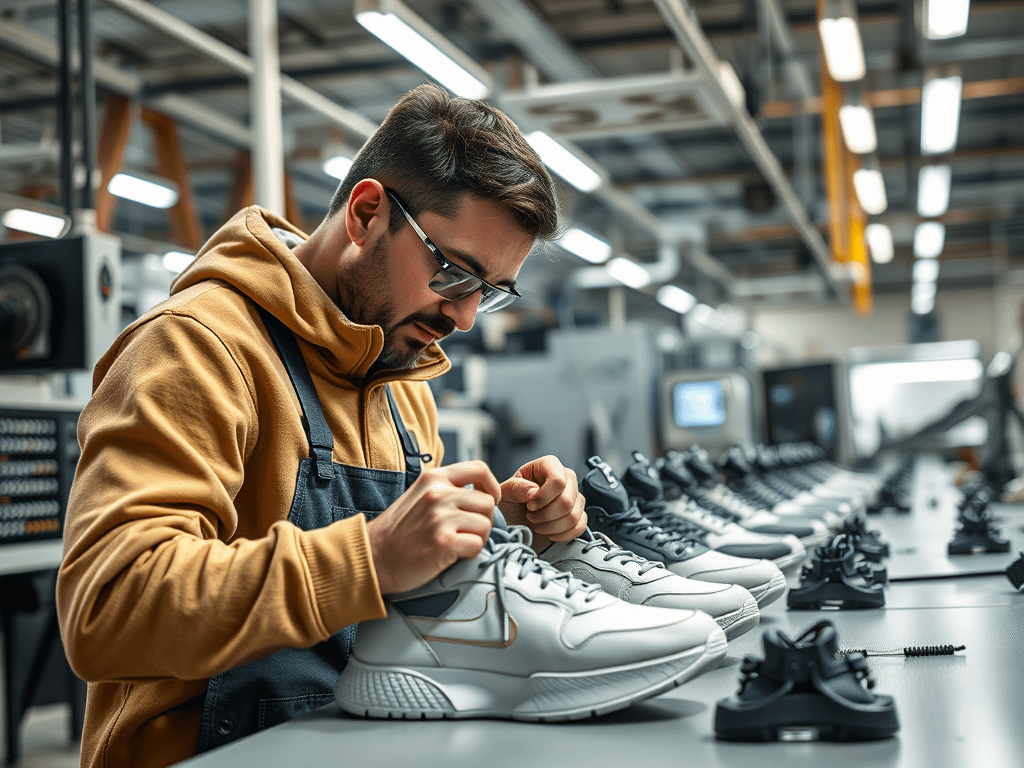
Shoe brands put their logo on the shoes and sell them as they made them. But the actual production work is done by the label manufacturers. They have a complete production setup, efficient labor, access to quality raw material, and follow ethical guidelines to produce wearable shoes. Brands collaborate with them to run their shoe lines. Here we will discuss what OEM shoe manufacturing is and why it matters for brands.
What is OEM Shoe Manufacturing?
It means working with an OEM shoe manufacturer to create footwear designed by the brand. The shoe brand handles the design and marketing work. While the manufacturer deals with sourcing, materials, and assembly.
Mostly, shoe brands work with OEM footwear suppliers in China and the Middle East to scale up production without creating their setups.
How Does OEM Shoe Manufacturing Work?
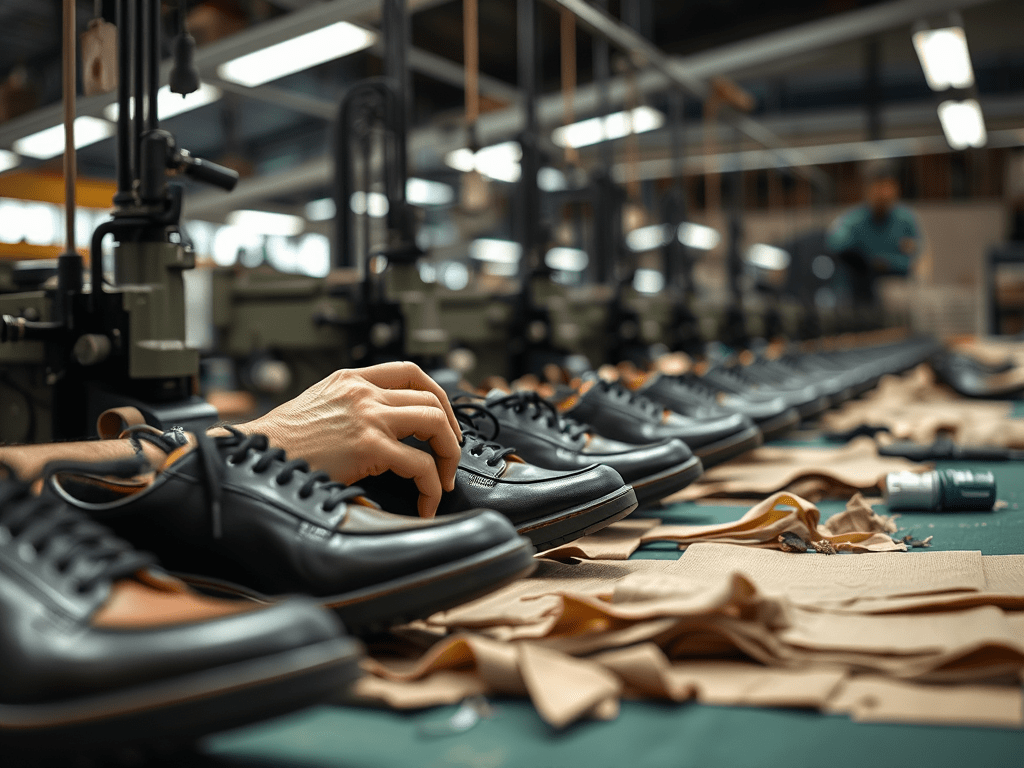
The shoe production process begins with a design brief given to the manufacturer by the brand. The OEM sneakers factory receives the design brief and converts it into sample shoes. Once the material sourcing is done and the sample gets approved, then full production begins.
Brand keeps control of the logos and packaging while the OEM shoe production team handles all the manufacturing operations. The production work ends when the shoes are shipped out with the brand’s name.
Benefits of OEM Shoe Manufacturing
An OEM footwear company helps brands to make their place in the shoe market without starting from scratch. By partnering with an OEM shoe manufacturer, brands can:
1. Lower Cost & Low MOQ
By working with a private label OEM shoes manufacturer, brands can cut down on production costs. The OEM footwear company has established supplier relationships and access to top-quality materials like mesh, leather, rubber, and other synthetic materials at affordable rates.
With bulk material sourcing, they cut down costs without compromising on quality. Many manufacturers also offer low MOQ OEM shoes, which means brands don’t have to deal with thousands of shoe pairs when they just start.
2. Access to Expertise
An OEM shoe factory China has decades of hands-on industry experience. They have deep technical knowledge of materials, lasts, and outsole construction that helps to convert sketches into wearable shoes.
A white label shoe maker uses high-tech tools like CAD and 3D modeling to refine the look, fit, and durability of the designs. Whether you want OEM custom sneakers or OEM athletic shoes, you can get the right help.
The manufacturer will handle the technical side of OEM shoe design while brands can focus on vision.
3. Focus on Brand Building
By having an OEM footwear manufacturer on the side, brands can focus on other aspects of business. They can make effective marketing strategies to boost their visual identity, connect with customers, and expand their market presence.
Brands can even launch new campaigns, create optimized content, and have a loyal fanbase while the production runs smoothly at the backend.
4. Faster Time to Market
Shoe trends are shifting quickly, and by collaborating with a custom OEM shoes manufacturer, brands can efficiently keep up with them. This is because they get ready-made production lines, efficient processes, and trained workers.
Whether you want to launch casual style shoes or OEM leather shoes, you can have them in weeks instead of months. Many manufacturers also handle labeling and packaging to speed things up further.
5. Scalability and Flexibility
The best thing about OEM shoe manufacturing is its ability to scale. Whether you want to produce 200 pairs or 20,000, you can scale production as per the business needs, with a custom OEM shoes manufacturer, brands can also switch between styles, sizes, and colors without spending extra money.
They even help by offering multiple prototypes so that brands can point out flaws or make desired changes before going full scale.
6. Transparent Sourcing and Export Infrastructure
Trusted OEM shoe export partners offer more than just production. They provide structure and reliability. An OEM shoe manufacturer deals with labeling laws, shipping logistics, compliance, and customs paperwork.
Their infrastructure reduces the chances of delays. A professional OEM shoe manufacturing partner understands international quality standards, which is why they offer batch testing, third-party inspections, and secure packaging. The pre-production testing helps brands to avoid legal consequences while selling globally.
What to Choose: OEM vs ODM
Many shoe brands confuse the terms OEM and ODM. But they both have different purposes in the footwear industry. In OEM shoe manufacturing, the brand gives its designs and retains full ownership of the intellectual property. The manufacturer brings the vision to life and gives full creative control to the brand.
On the other side, ODM shoe manufacturing creates its designs and gives brands ready-made styles. They can offer minor adjustments like labeling and branding, but not major design modifications. ODM manufacturing helps brands with fast and cost-effective shoe launches so they can take the first step in the market.
So, if you want to create custom OEM shoes to reflect your brand’s personality and stand out in the market, then OEM is a smarter choice. But if you want quick launches or experimenting with a product category, then ODM is right for you.
Future Trends in OEM Manufacturing
The world of OEM shoe manufacturing is changing fast. Brands are looking for manufacturers that prefer sustainability as the demand for fair labor practices and recycled materials has increased. Many OEM footwear factories are investing in green leather sourcing, water recycling, and social audits.
They are also introducing smart automation and CAD CAM tools to speed up sampling. There is also a push toward local manufacturing to shorten supply chains. Some brands are exploring mini hubs near markets.
Still, large OEM factories in China and Vietnam dominate wholesale OEM shoe production. These moves may alter how many private label OEM shoes partners position themselves in the next few years.
Wrapping It All Up
OEM shoe manufacturing has become the backbone of the global footwear industry. By partnering with label manufacturers, brands don’t have to build factories. They get access to expert craftsmanship, reliable production, and time to focus on branding.
The OEM manufacturing offers flexibility and scalability to brands that want to grow in this competitive market. So if you are new to the shoe business, you must opt for the OEM manufacturing model.

